
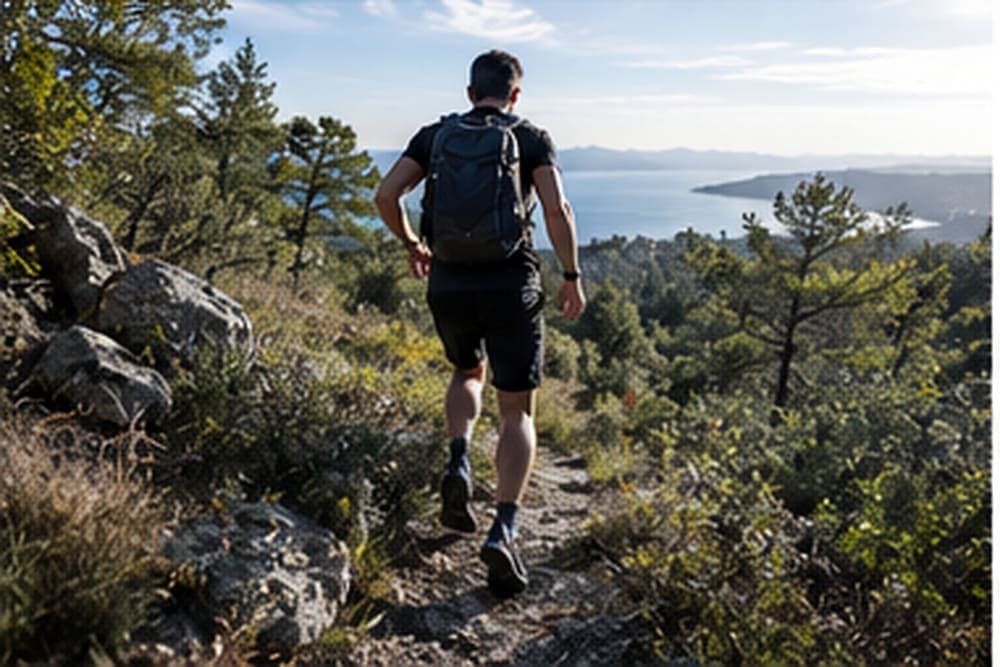
Hormesis sets a dosing law that applies to any challenge
Hormesis is the response of a living organism to a moderate challenge, followed by a repair that increases its resistance. Sauna, cold exposure and exertion are its most discussed forms. Cellular mechanisms are described in the laboratory: heat shock proteins, Nrf2, mitochondrial density. What varies from one practice to another is the size of the adaptation and how it translates clinically. The dose is expressed in different units depending on the practice: minutes per week, degrees and duration for a bath, repetitions per kilogram of fat mass for strength.
The shape of the curve is stable: it is the best operational definition of the concept. Too small a challenge produces nothing, the intermediate zone produces a benefit, excess produces damage. That regularity, reopened since Calabrese's work, raises the useful question: locating the dose, not choosing between challenge and rest. Recovery therefore belongs in the prescription, just like the challenge itself.
The difficulty is that this curve stays asymmetric depending on the organ involved. Muscle adapts quickly, while the cardiovascular system tolerates sudden temperature changes poorly in a fragile person or one on medication. Data on mortality or on a clinical marker remain scarce outside physical exercise. The professional states the level of evidence being used and the population concerned before recommending.
Moderate exercise stress carries the strongest level of evidence
Exercise is the best established moderate stress for all-cause mortality. Each session improves mitochondrial capacity, insulin sensitivity and bone tissue. International recommendations set 150 to 300 minutes of moderate activity, or 75 to 150 minutes of vigorous activity per week, with two muscle strengthening sessions. The benefit to risk ratio is the most favorable in all of prevention.
The dose-response relationship is favorable across a wide range, which is rare in prevention. Moving from zero to 150 minutes a week produces a measurable gain in functional capacity, blood pressure and fall risk in older adults. The return per minute invested then declines, with the plateau around 300 to 600 weekly minutes. Exceeding the recommendations without recovery exposes a person to overload, with lost performance and more injuries. It then becomes a risk factor through excess dose, which confirms the U-shaped curve.
Exercise is also the best teaching tool for the concept. It explains the difference between a challenge and an assault without any jargon about heat or cold. Chronology matters as much as dose: adaptation builds over several weeks and holds as long as regularity persists. A long break cancels a large part of the benefit, the simplest signal to monitor.
Comparing studied doses and levels of evidence on a common scale
Comparing practices means separating the doses used in studies from the doses recommended. Sauna cohorts describe 4 to 7 sessions of 10 to 20 minutes a week, and cold exposure is almost absent there. Training protocols are standardized and reproducible, which makes comparison possible. This structure explains why one practice is solidly documented and the other only associated with correlations.
Adaptation has been demonstrated under very different conditions depending on the practice. For training, it is measured in ordinary people, on clinical outcomes: strength, insulin sensitivity, bone density. For sauna and cold, it is measured on cells, isolated tissue or animals, with indicators that cannot be transposed to a healthy person. That evidence gap must be made explicit: it changes the strength of the recommendation.
The consequences also differ by population. In an undernourished older adult or someone on cardiovascular medication, a temperature axis can be more harmful than in a healthy adult. In an adult with no risk factor, the benefit to risk ratio remains favorable for exercise and uncertain for thermal exposures. This individualized reading secures the decision and makes it explainable.
| Practice | Studied dose | Main result | Level of evidence |
|---|---|---|---|
| Moderate physical activity | 150 to 300 min per week | Reduction in all-cause mortality | Established |
| Vigorous activity | 75 to 150 min per week | Gain in VO2 max and lower insulin resistance | Established |
| Muscle strengthening | 2 sessions per week | Maintenance of muscle mass and balance | Established |
| Sauna sessions | 4 to 7 sessions of 10 to 20 min | Association with lower cardiovascular mortality | Probable, observational data |
| Cold exposure | 2 to 5 baths of 2 to 5 min | Perceived ease during effort, no demonstrated clinical gain | Experimental |
| Dietary fasting | 16 to 48 h, 3 to 5 times a week | Altered metabolic variability, survival not assessed | Emerging |
| Intense training | 75 to 150 min per week | Gain in VO2 max, narrower benefit to risk balance | Established |
Measurable markers of controlled challenge practices and the associated level of evidence.
Cold exposure improves perceived effort without a demonstrated clinical benefit
Controlled trials on cold exposure are few and small. The most used protocols combine baths of 2 to 5 minutes, 2 to 5 times a week, in water between 10 and 15 degrees. The outcomes measured concern mainly perceived ease during effort, perceived recovery and a few immune markers. The benefits often put forward, lower incidence of infections or lasting performance improvement, are not established.
Cold exposure triggers a release of noradrenaline, increases muscle tone and changes the perception of fatigue. It reduces residual muscle soreness in some people and structures a recovery ritual, two effects that support adherence. Neither translates into a measured gain on a health marker. The distinction between perceived improvement and measured benefit comes up in the very first interview. Acute exposure used as recovery and chronic exposure repeated for weeks remain two distinct questions. The longest published protocols rarely last more than three to four weeks, which leaves lasting adaptation poorly documented.
Safety requires a precise framework before any recommendation. Cold exposure is not advised with known cardiovascular disease, uncontrolled hypertension, arrhythmia, Raynaud's disease, or during pregnancy or a respiratory infection. Progression happens in steps, at the end of the day, with a slow exit from the water and full rewarming before exertion. The session is never done alone, and is followed by rest away from the cold.

Sauna is associated with lower mortality in Nordic cohorts
The Finnish Thousand Adult Male Study and KIHD cohorts describe 4 to 7 sessions of 10 to 15 minutes a week, at 80 or 90 degrees. They report a dose-response relationship between frequency and cardiovascular mortality, associated with a fall in all-cause mortality. That association persists after adjustment for age and smoking. These results make sauna a practice with a probable benefit, unproven, with no randomized trial.
Several mechanisms explain the physiological consistency of these observations. The prolonged rise in skin temperature produces vasodilation and better endothelial function. Heat shock proteins released during the session take part in cellular repair and in protecting contractile proteins. A meta-analysis places the association at 4 to 7 sessions a week, with a lower risk of dementia and cardiovascular mortality than at 1 or 2 sessions. Two randomized trials from 2018 give divergent signals, one on psychophysiological well-being after a year, the other with no effect on biological stress. The case remains consistent, without turning an observation into causality.
The results rest on a comparison of practitioners and non-practitioners, while physical activity, diet, alcohol and socioeconomic level also differ. The absence of a randomized trial prevents any causal conclusion on mortality. Sauna remains inadvisable with unstable heart disease, marked hypotension, pregnancy and acute respiratory illness, with rehydration before and after the session. Its value is limited to comfort, recovery and ritual.

Cellular adaptation is built in steps over twelve weeks
Cellular adaptation responds to a repeated signal, not to an isolated event. The simplest method: twelve weeks, three steps of four weeks, one new practice per step. The first installs the rhythm, the second adjusts the dose, the third consolidates, on a volume consistent with the recommendations. This format avoids stacking practices started in the same week and clarifies the results. Each step ends with a written review: indicators, observed tolerance, decision to continue, adjust or stop.
Four indicators are enough to decide whether to move to the next step. Resting heart rate, blood pressure measured lying down, sleep quality and muscle recovery form a dashboard kept by the person. Adherence below three sessions a week for two consecutive weeks signals an adaptation problem. Documented follow-up separates a lack of recovery from a lack of adherence.
A practice with no felt benefit after eight to twelve weeks, or with warning signs, should be removed from the plan. Persistently high resting heart rate, sleep problems, weight loss or malaise require stopping and a medical assessment. In older adults, priority goes to muscle strengthening and balance, which produce documented functional gains, with thermal exposures coming last. The latency period is part of the judgment: no practice can be assessed before three to four weeks. The professional thus justifies each decision with criteria, not with personal preference.

Sources
- 1.Calabrese EJ. Hormesis: a fundamental concept in biology. Microb Cell. 2014.
- 2.Laukkanen T, et al. Association between sauna bathing and fatal cardiovascular and all-cause mortality events. JAMA Intern Med. 2015 (étude observationnelle).
- 3.WHO. Guidelines on physical activity and sedentary behaviour. 2020.
- 4.Calabrese EJ, et al. Hormesis determines lifespan. Ageing Res Rev. 2024.
- 5.Kunutsor SK, Laukkanen JA. Does the combination of Finnish sauna bathing and other lifestyle factors confer additional health benefits? A review of the evidence. Mayo Clin Proc. 2023.
- 6.Lee E, et al. Effects of regular sauna bathing in conjunction with exercise on cardiovascular function: a multi-arm randomized controlled trial. Am J Physiol Regul Integr Comp Physiol. 2022.
- 7.Cain T, et al. Effects of cold-water immersion on health and wellbeing: a systematic review and meta-analysis. PLoS One. 2025.
Reading studies is one thing, turning them into a plan is another
The Longevity Practitioner certification teaches the method that turns this kind of data into an accompaniment decision: assess, prioritise, plan over 90 days, re-measure, and know when to hand over.
11 modules, €2,200. Enrol
Continue reading
Benjamin Sant
Co-founder of the School of Longevity
Cofounder of the School of Longevity with Tristan Maruyama. A former officer trained at Saint-Cyr from 2019 to 2022 and a coach since 2018, he has supported more than 4,000 people. He leads the School's editorial content with one constant principle: pass on only what can be situated, verified and applied seriously.
This article is published for information and education. It does not replace medical advice. For any personal health question, consult a healthcare professional.